
Garage door springs are small components with big responsibilities. They support the entire weight of your garage door and keep it running smoothly day in and day out.
A broken coil spring in a car can affect the car’s suspension angles, leading to misalignment and poor ride quality—similarly, the correct angles in garage door springs are essential for smooth and safe operation. Just as coil springs aid other suspension parts in supporting a car’s stability and safety, garage door springs play a vital role in the overall security of your house by ensuring the garage door operates safely.
But like any part under constant stress, springs eventually wear out and may even snap if not maintained, so having them repaired promptly is essential to prevent serious injury and expensive damage. Catching the early signs can help keep your home and family safe.
Introduction to Garage Door Springs
Garage door springs are the unsung heroes of your garage, quietly supporting the heavy lifting every time you open or close the door. Most garage doors rely on powerful torsion springs, which store and release energy by twisting and unwinding, to counterbalance the door’s weight and ensure smooth, safe operation. Alongside torsion springs, some systems use extension springs, and together these two types of springs are essential for the reliable function of most garage doors.
When a spring breaks, whether in your garage or your car’s suspension, the results can be dramatic: you might notice uneven ride height, poor handling, loud suspension noises, or even a door that refuses to budge.
These broken coil spring symptoms are more than just inconveniences; they can lead to serious injury, damage to other components, and costly repairs if not addressed promptly.
Key Takeaways:
- Watch for uneven movement, loud noises, or visible damage.
- Springs lose tension over time and require periodic replacement.
- Using a garage door with a broken spring is a safety risk.
- Only trained technicians should handle spring repairs.
- Early repair reduces overall repair costs and downtime.
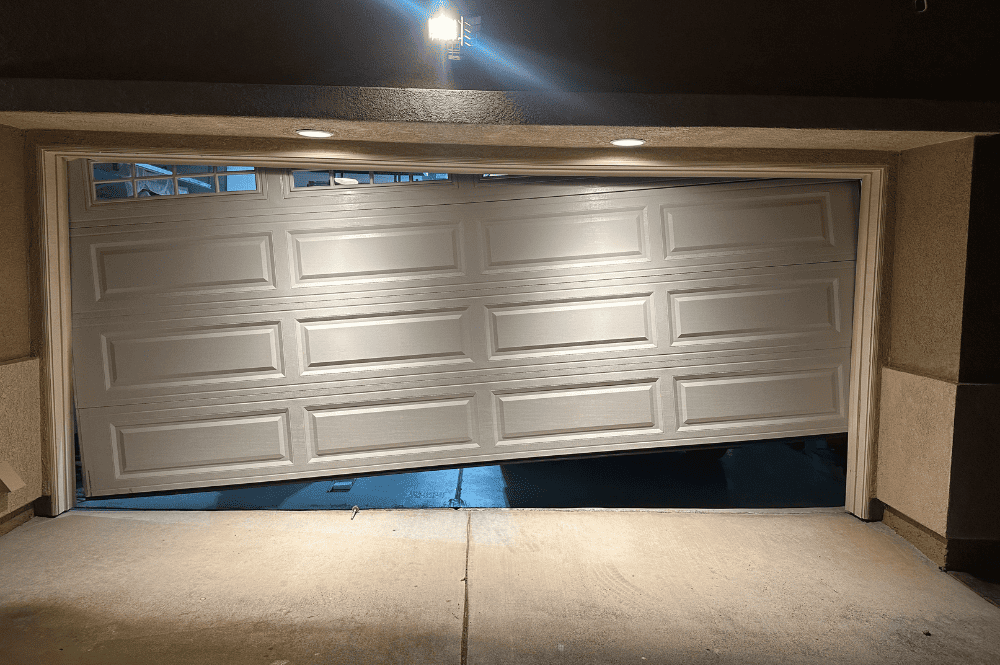
1. Your Garage Door Opens Crooked or Uneven
When torsion springs begin to fail, they often cause the door to lift unevenly. You might notice one side lagging or tilting more than the other. This imbalance places added strain on the cables, rollers, and track—leading to misalignment or wear in other parts.
Most garage doors rely on one spring or a pair of springs to distribute tension evenly. If one spring loses torque, it shifts the entire load to the other, making breakdowns more likely. This is one of the more common signs that repair is needed.
2. The Door Feels Too Heavy to Lift
Your garage door may feel significantly heavier than normal if the spring has snapped or lost too much tension. These springs are engineered to counterbalance the door’s weight, but once they’ve worn down, lifting becomes a challenge.
Homeowners often mistake this for opener issues when in fact, it’s a broken coil spring symptom. If the door resists manual lifting or strains your opener, it’s time for a visual inspection and service.
3. You Hear a Loud Bang from the Garage
One of the most unmistakable signs of a broken spring is a loud snapping noise, almost like a firecracker going off. That sound usually comes from the torsion spring releasing its stored energy suddenly when it breaks.
A broken spring will have a clear separation in the coil or signs of wear like corrosion, rust, or deformation. You may also notice a visible space or gap between the coils, which is a strong indicator of spring failure.
These broken spring symptoms often leave the garage door immobile, and forcing it open can damage cables or opener systems. If you hear this and the door no longer works, avoid using it and schedule immediate repair.
4. A Visible Gap in the Coil
If you look above your garage door and notice a visible break or gap in the spring coil, that spring has snapped. A fully functioning torsion spring should be tightly wound around its shaft. A broken spring will have a clear separation in the coil or signs of wear like corrosion, rust, or deformation.
Since most torsion springs are mounted in hard-to-access places, we recommend calling a professional technician to perform a complete inspection and recommend replacement services as needed.
5. Your Opener Motor Is Working Too Hard
When garage door openers strain or hum but fail to lift the door, the underlying issue often stems from a faulty spring. Springs are designed to bear most of the door’s weight; when that support fails, your opener must handle too much load. That stress may tear internal gears or damage electronic devices controlling the opener.
This issue leads to higher repair costs down the road and potential failure of other components. A local expert can evaluate your setup and determine if a spring replacement is the right solution.
Why Spring Repairs Should Always Be Left to the Pros
Garage door spring systems are under extreme pressure. Torsion springs, in particular, carry enough force to cause serious injury if handled without proper tools or training. DIY repairs on broken coil springs can go wrong fast.
Professionally trained technicians have the experience, equipment, and materials to safely handle spring repair and installation. They can also ensure that high quality parts are installed correctly, so you don’t end up with more issues or added costs down the road. In addition, safety features such as the reverse function are thoroughly assessed and properly repaired to prevent accidents and ensure your garage door operates safely.
At Precise Garage Doors Services, we take great pride in providing safe, precise spring repairs using top-tier components across San Diego County. We maintain a large inventory of torsion springs and offer fast delivery options to ensure immediate repairs when you need them most.
Keep Springs in Top Shape with Preventive Maintenance
Routine maintenance is your best defense against sudden failure. Spring wear builds slowly due to metal fatigue, temperature fluctuations, and repeated cycles of tension and release.
During maintenance visits, technicians will inspect all garage door components—including springs, cables, shafts, and openers—tighten hardware, apply corrosion-resistant lubrication, and assess the system’s balance. This helps detect early signs of damage and extends the life of your springs, reducing the likelihood of surprise breakdowns.
Don’t Ignore the Warning Signs
Garage spring problems rarely go away on their own. If you’ve noticed anything like unusual noises, visible coil separation, or difficulty opening your door, it’s time to act. Ignoring these signs can damage other parts, cause misalignment, or result in full system failure. A broken spring can also create hazards for other road users if parts fall onto the driveway or obstruct nearby paths.
Contact Precise Garage Doors Services today to schedule a visual inspection or repair visit. Our team is trusted by San Diego homeowners and businesses for fast, safe, and cost effective service you can count on.
FAQ
How do I know if my garage spring is broken or just worn out?
A completely broken spring usually causes the door to stop working. Worn springs still function, but you’ll notice uneven lifting or motor strain.
Can I replace only one spring if it’s broken?
In most cases, replacing both springs is recommended. When one spring breaks, the other is often close to the end of its life. We’re happy to explain your options during your service request.
How much does spring repair typically cost?
Repair costs can range between $150 and $350, depending on your door size, spring type, and labor. We offer transparent pricing and free estimates before any work begins.
Is it safe to open a garage door with a broken spring?
No. Attempting to lift or operate a door with a broken spring risks damage or injury. If your spring is broken, avoid using the door and schedule repair as soon as possible.
What are the types of garage door springs?
There are two types: torsion springs and extension springs. Torsion springs are more common in modern setups and are mounted above the door. Need help identifying yours?
